Stories Around Food
Stories Around Food2020
Little Falls, Minnesota
In 2019, artist Heidi Jeub set up in a big blue trailer at the Little Falls Farmers Market and simply showed up — week after week — to talk with farmers, vendors, restaurant owners, and everyday community members about food. Not through a focus group or a formal survey, but the way real conversations happen: slowly, casually, over time. Like the harvest itself, the connections couldn't be rushed.
What emerged from those conversations was a portrait of a community deeply rooted in the rhythms of growing, preserving, and sharing food. The salsa makers arriving with precise lists of poundage. The families hunting for unusual jams and vegetables on weekends. The quiet, purposeful culture of canning, freezing, pickling, and preserving that defines Minnesota life — and survival.
Then 2020 arrived, and everything those conversations had uncovered suddenly became urgent. As the pandemic upended daily life, the people who had spent years quietly stocking their pantries and building relationships with local farmers found themselves steady while the world scrambled. Food systems that most people had never thought about became impossible to ignore. The inequities in food access became starkly visible. And the Mason jar — humble, practical, passed down through generations — became a symbol of something much larger: preparedness, perseverance, and community resilience.
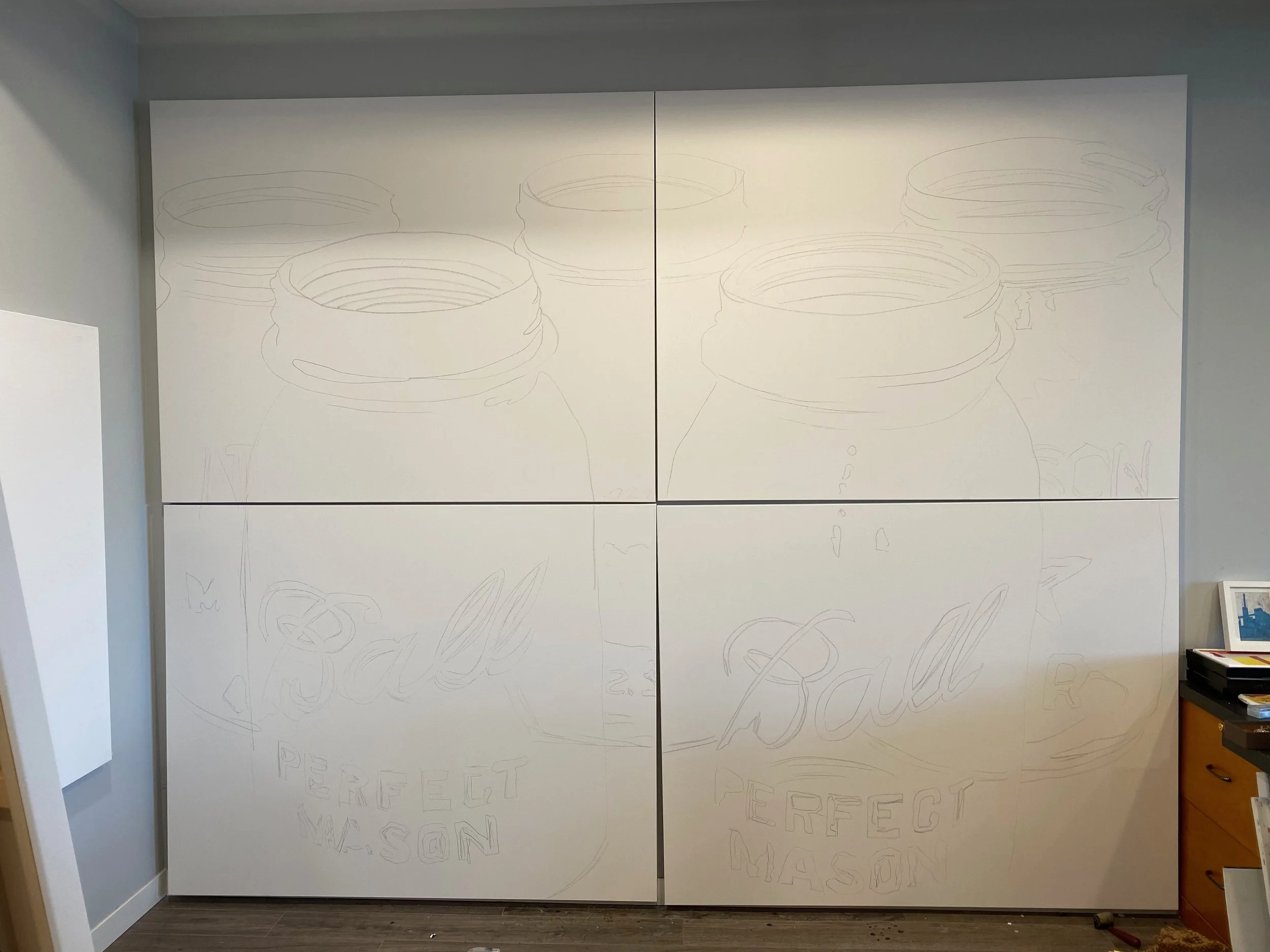
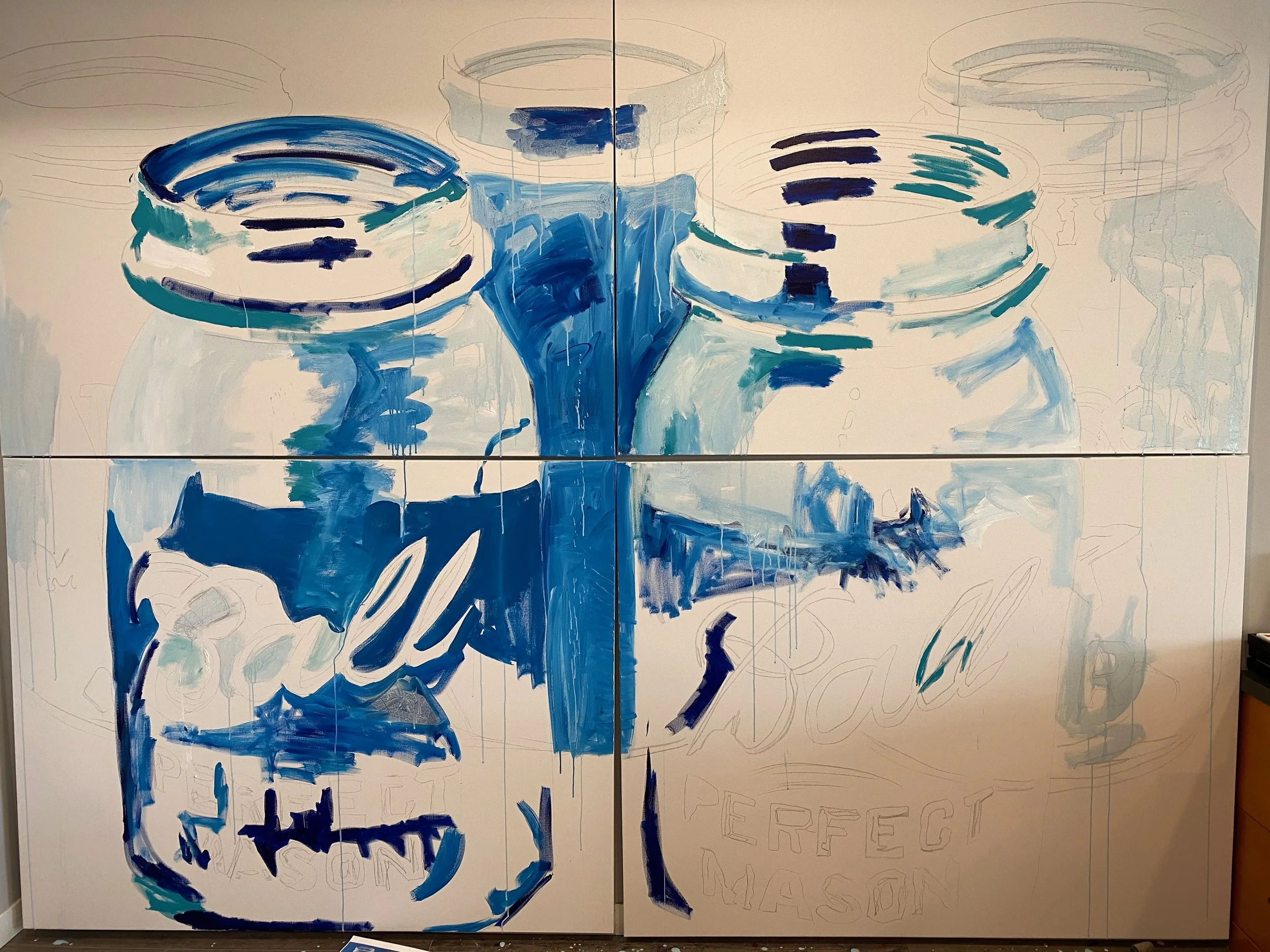
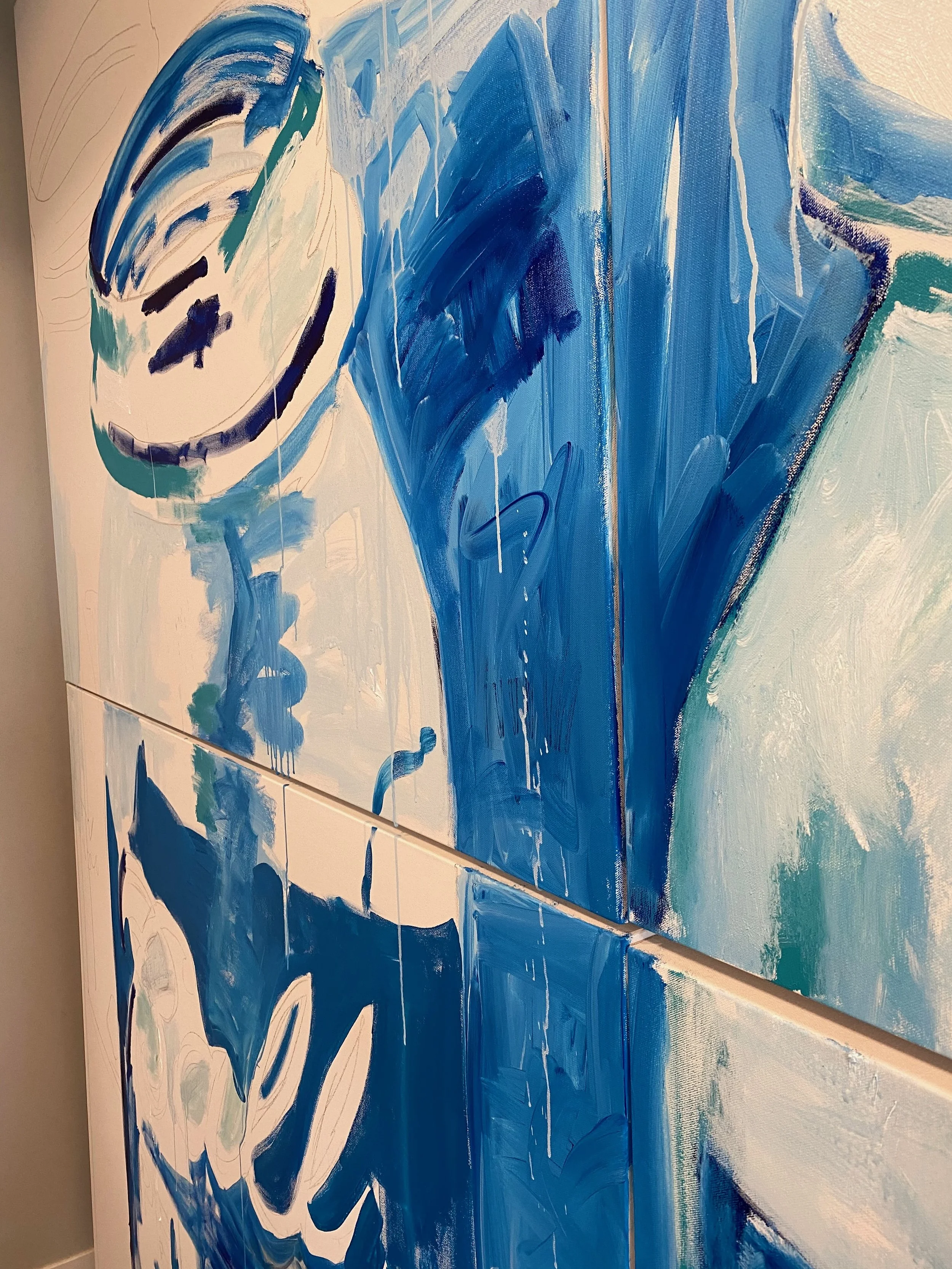
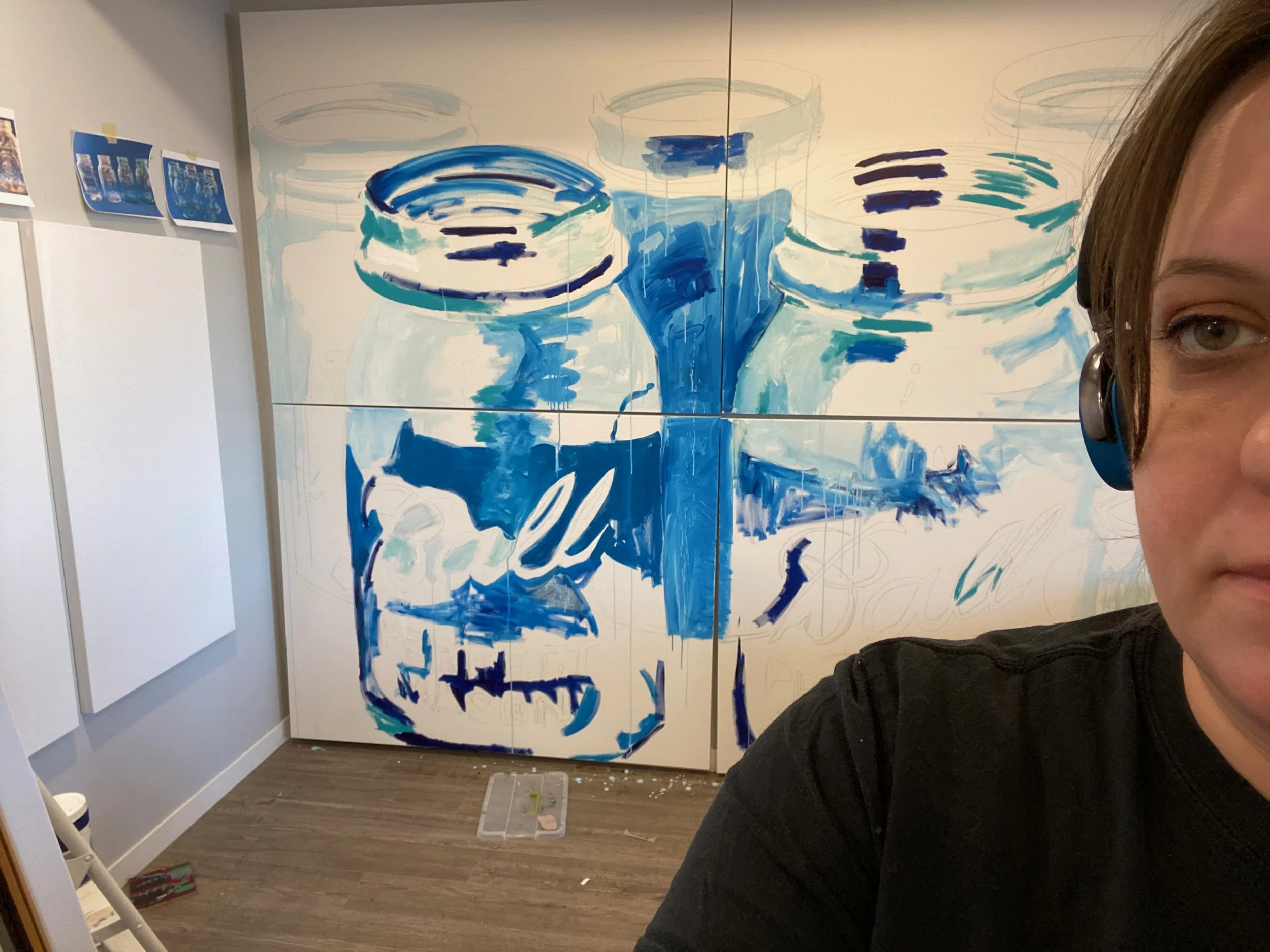
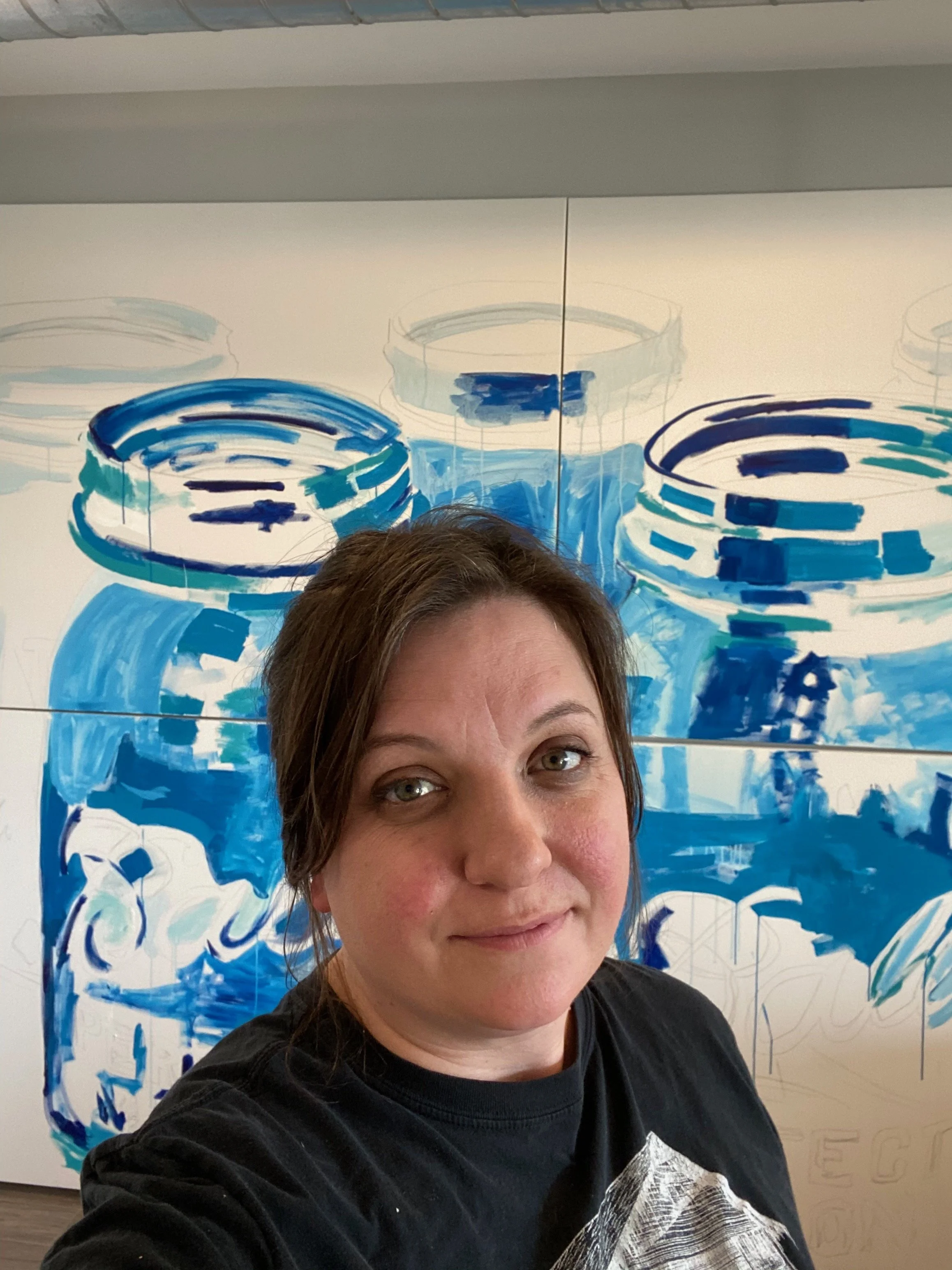
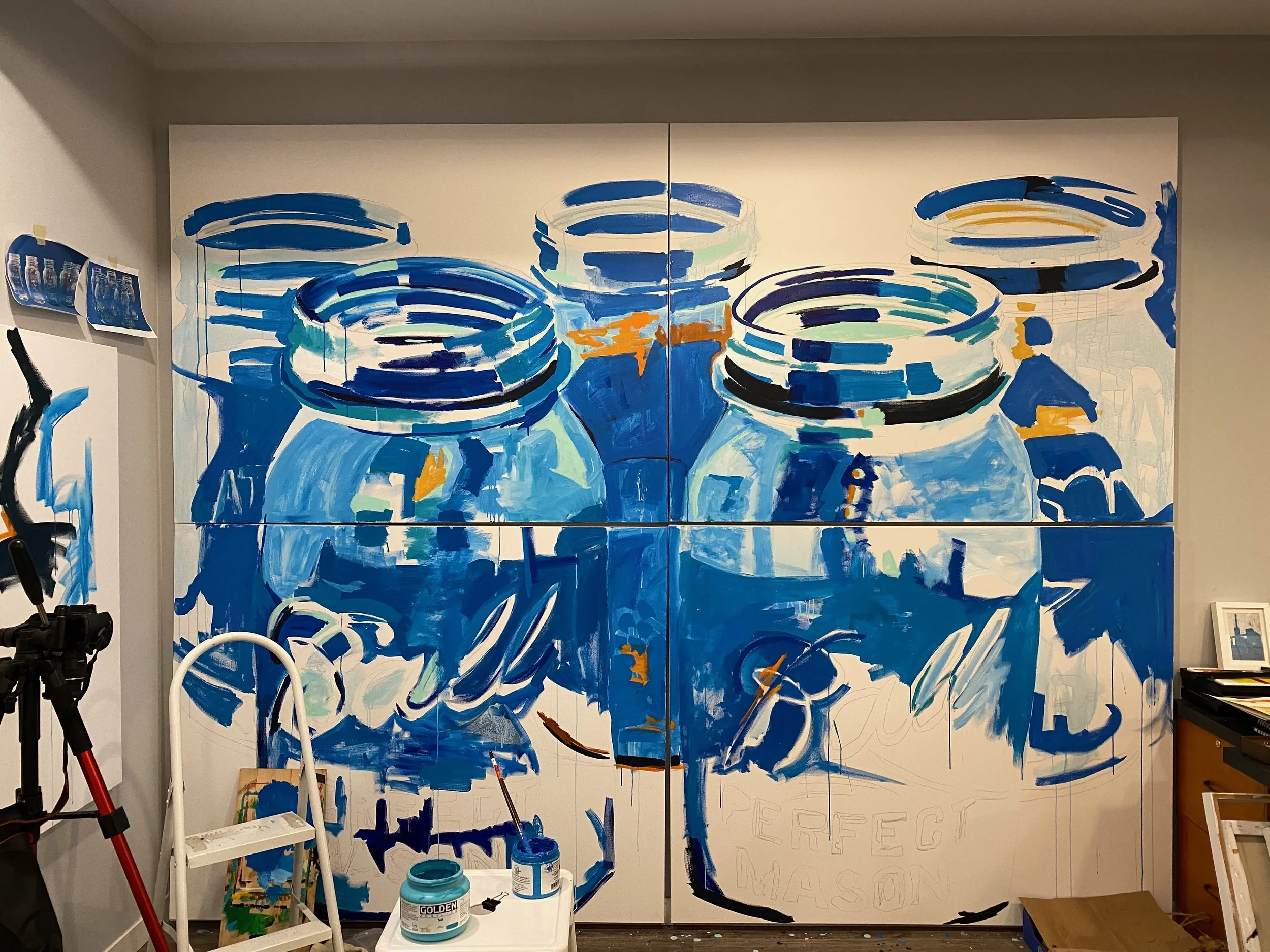
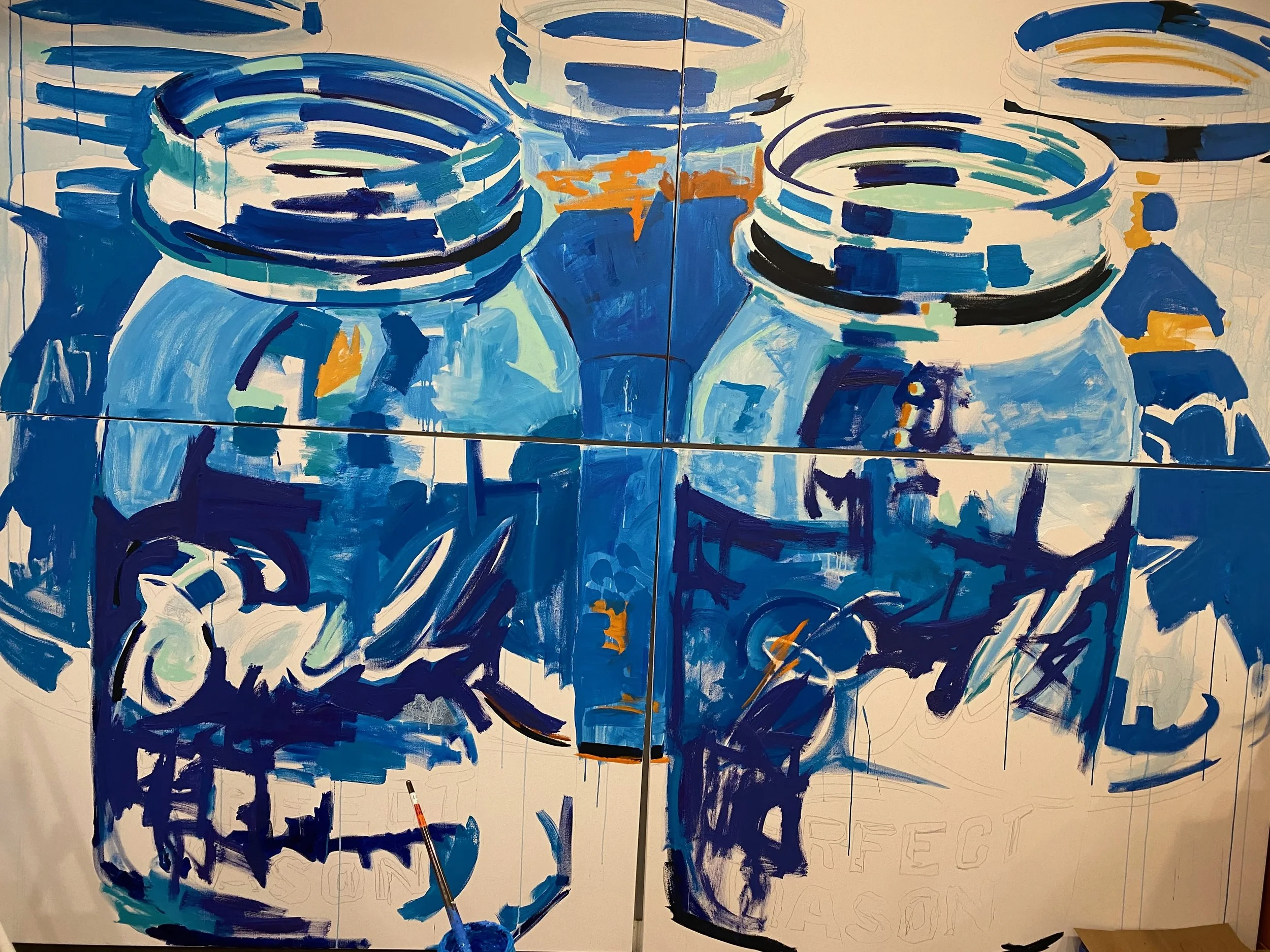
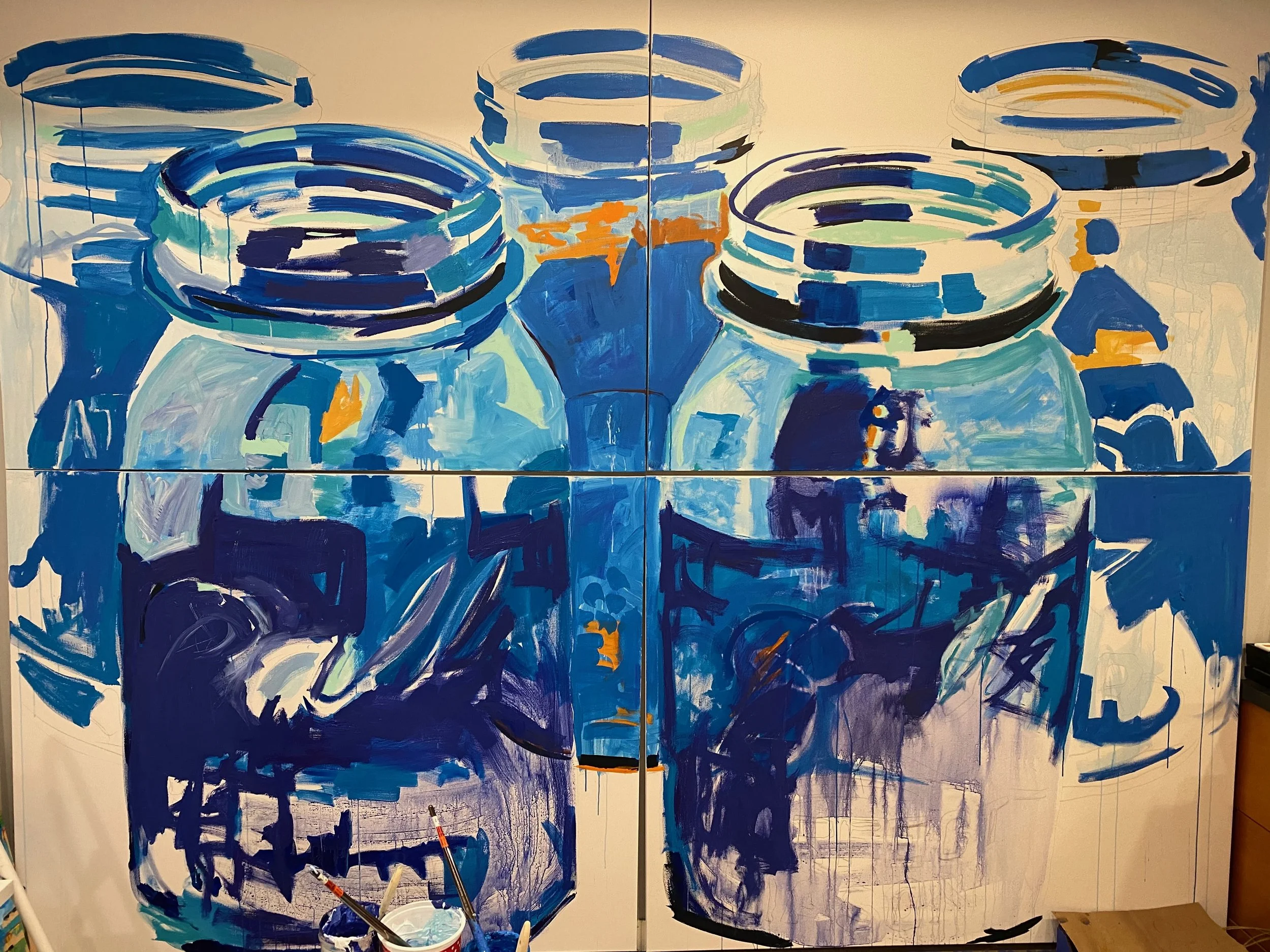
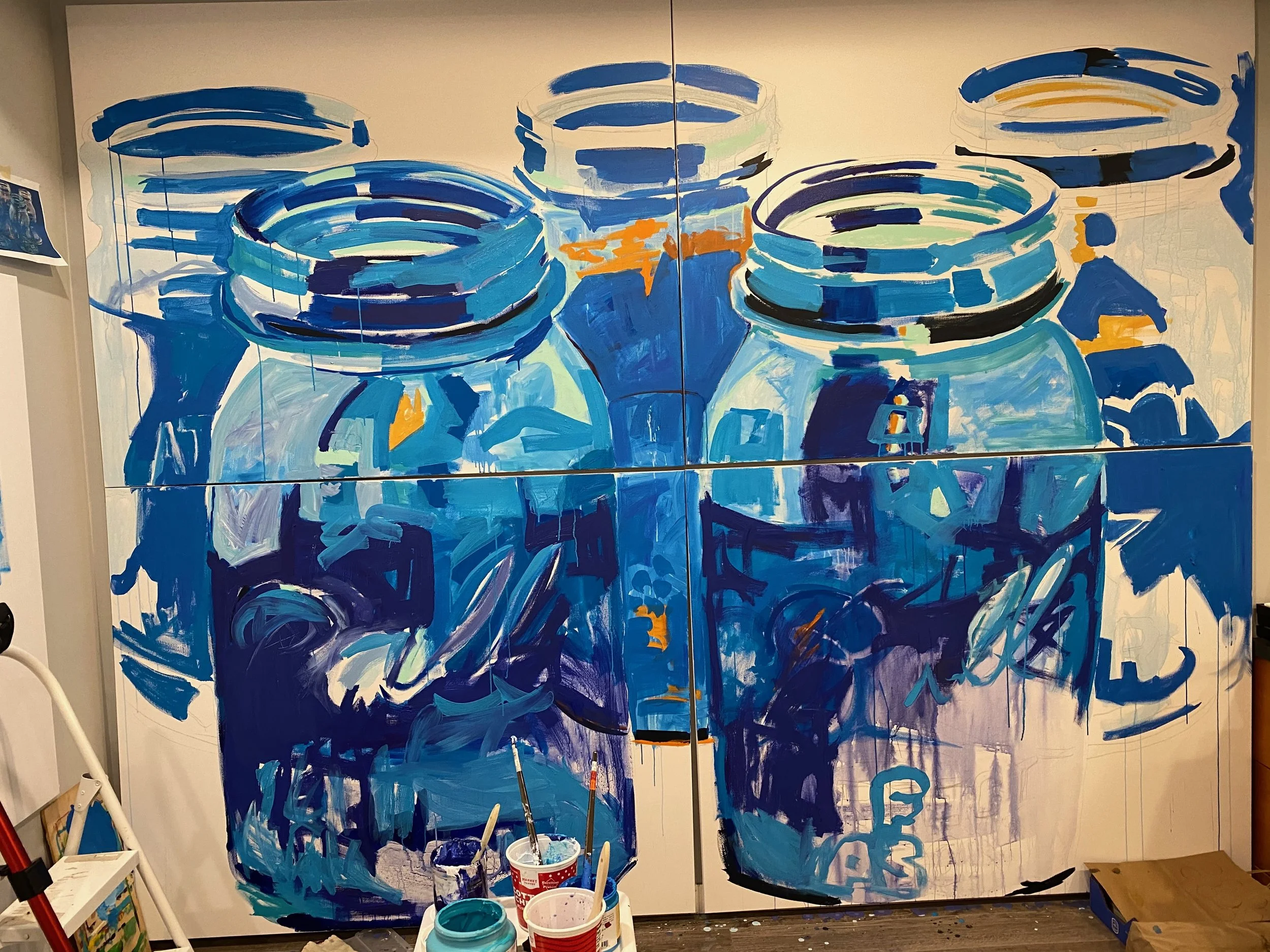
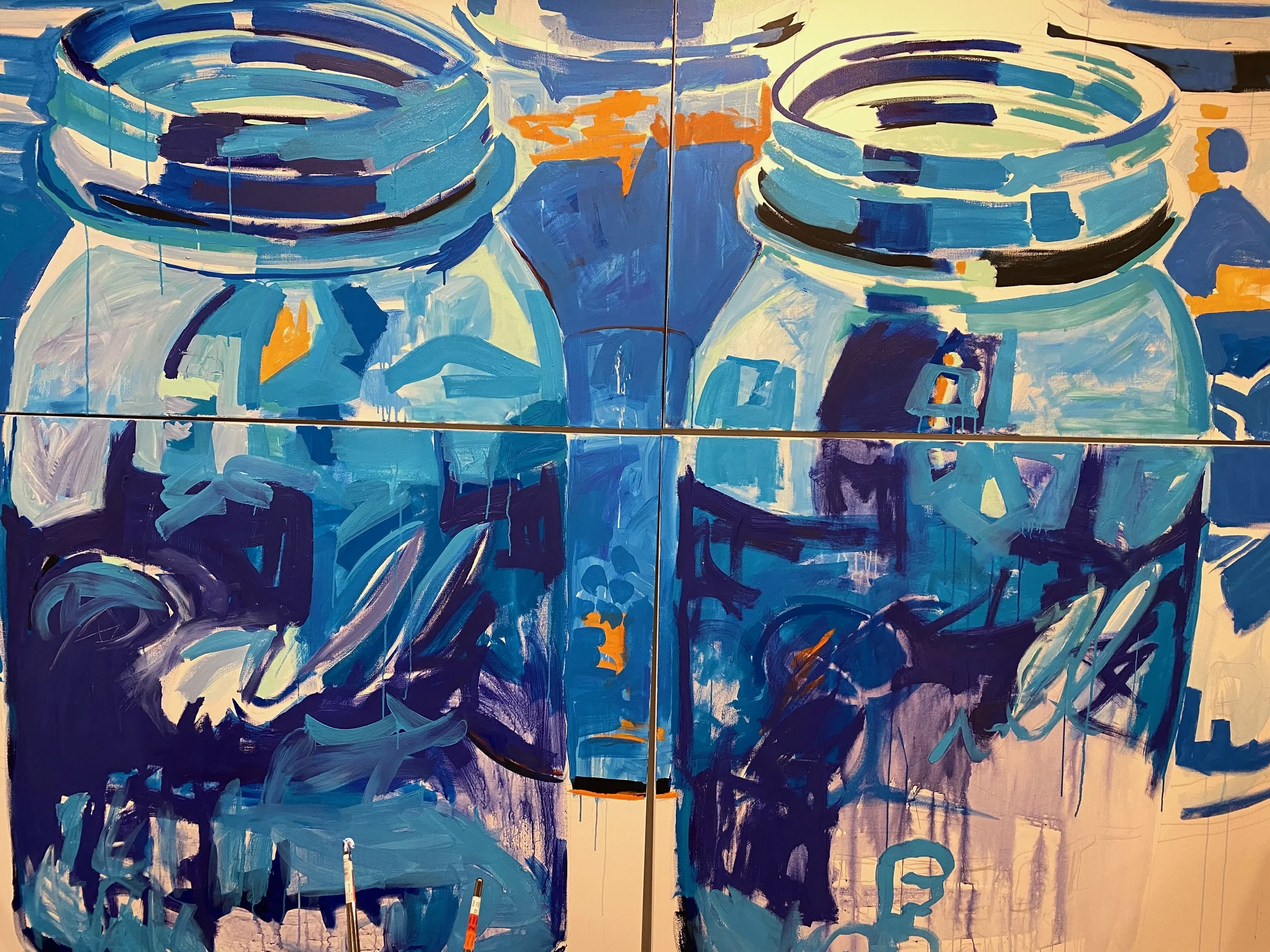
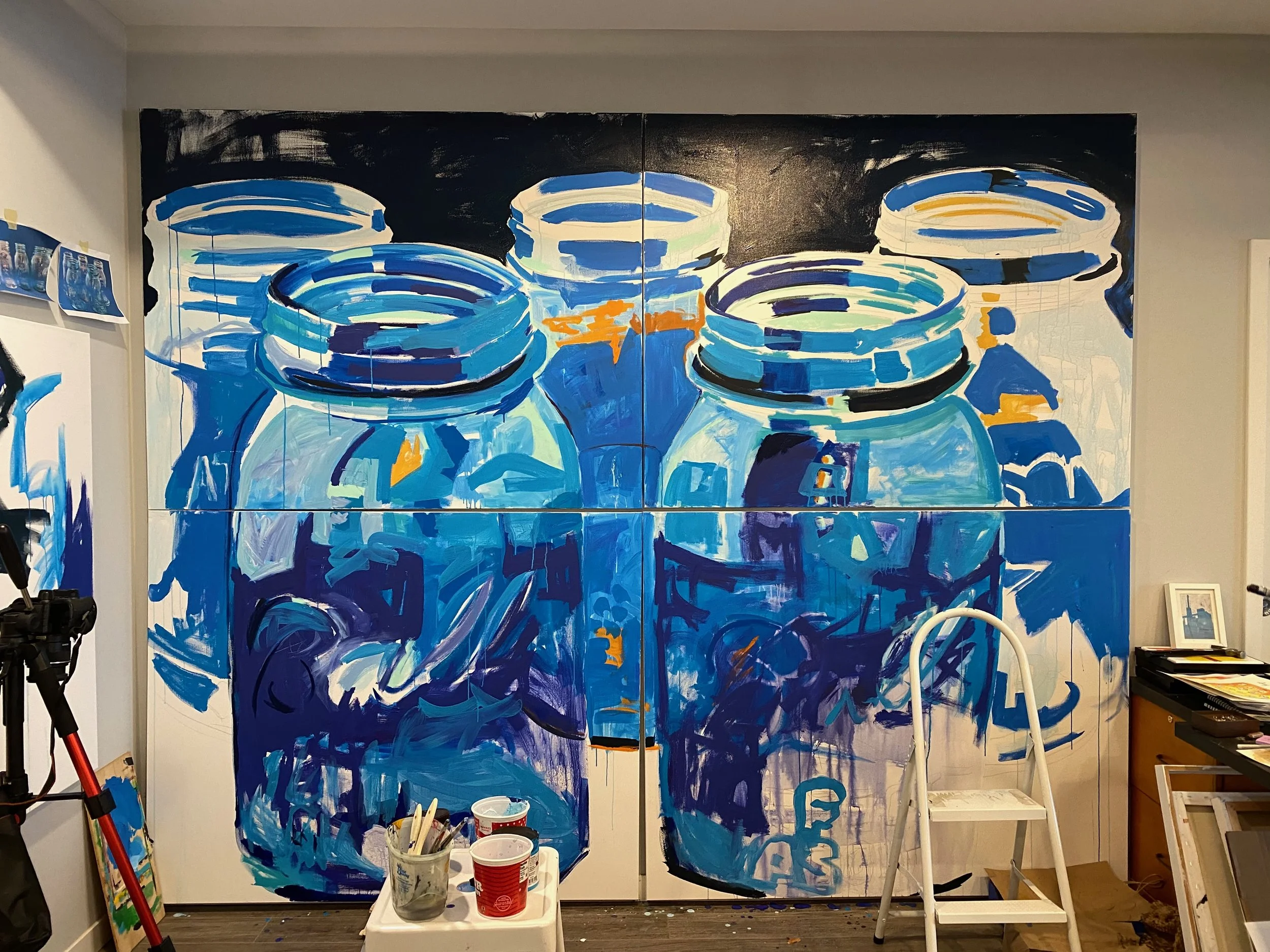
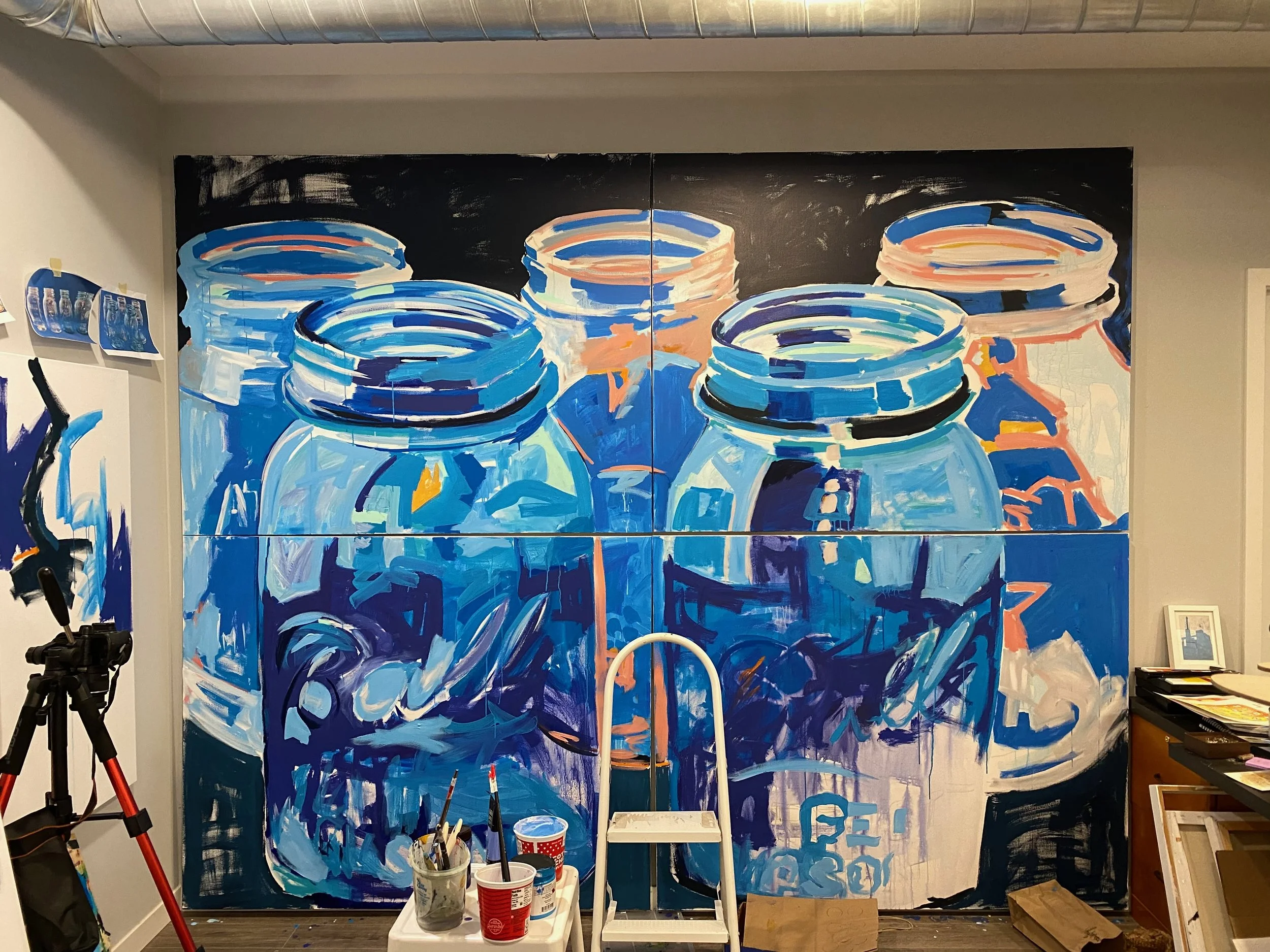
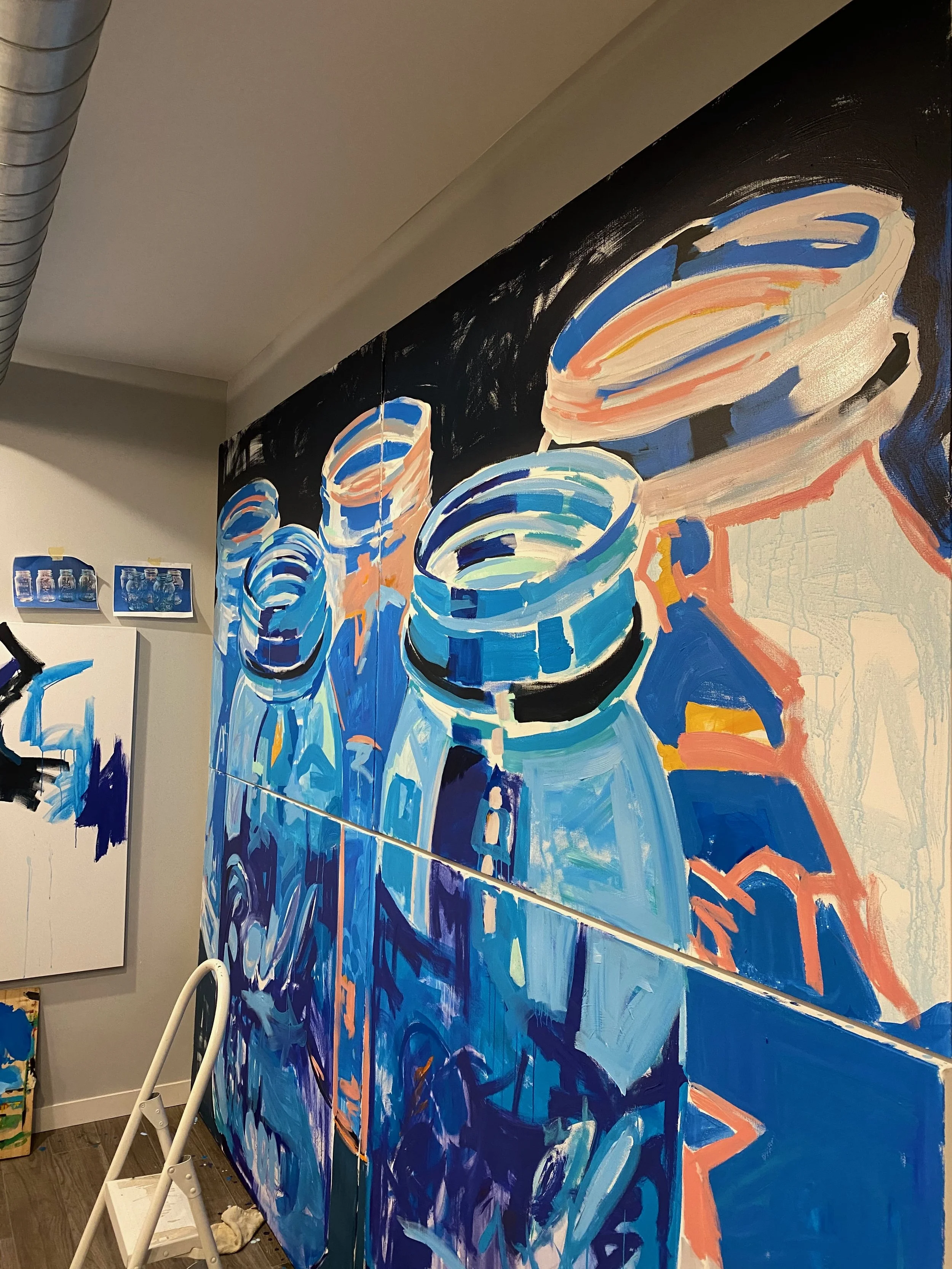
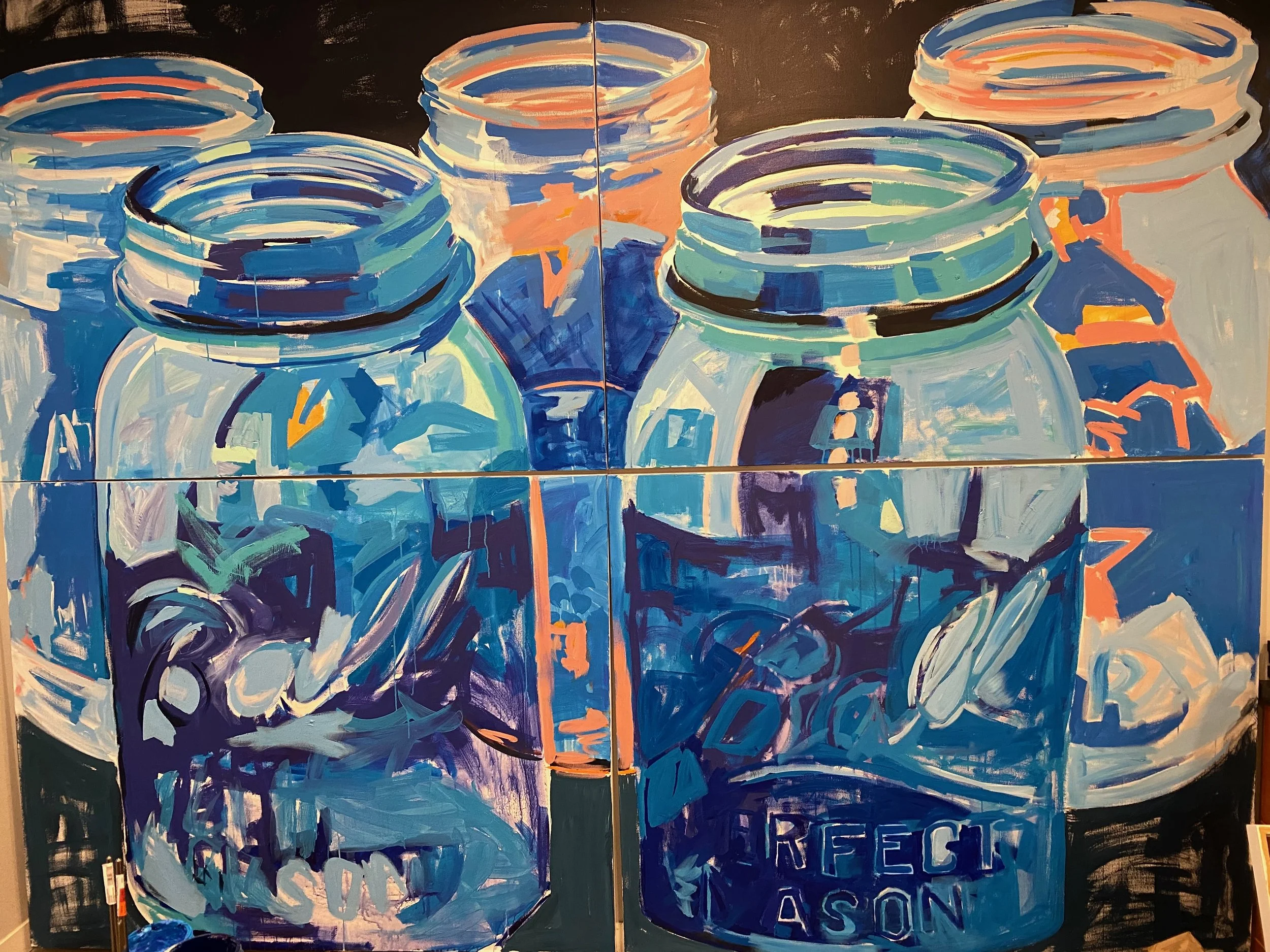
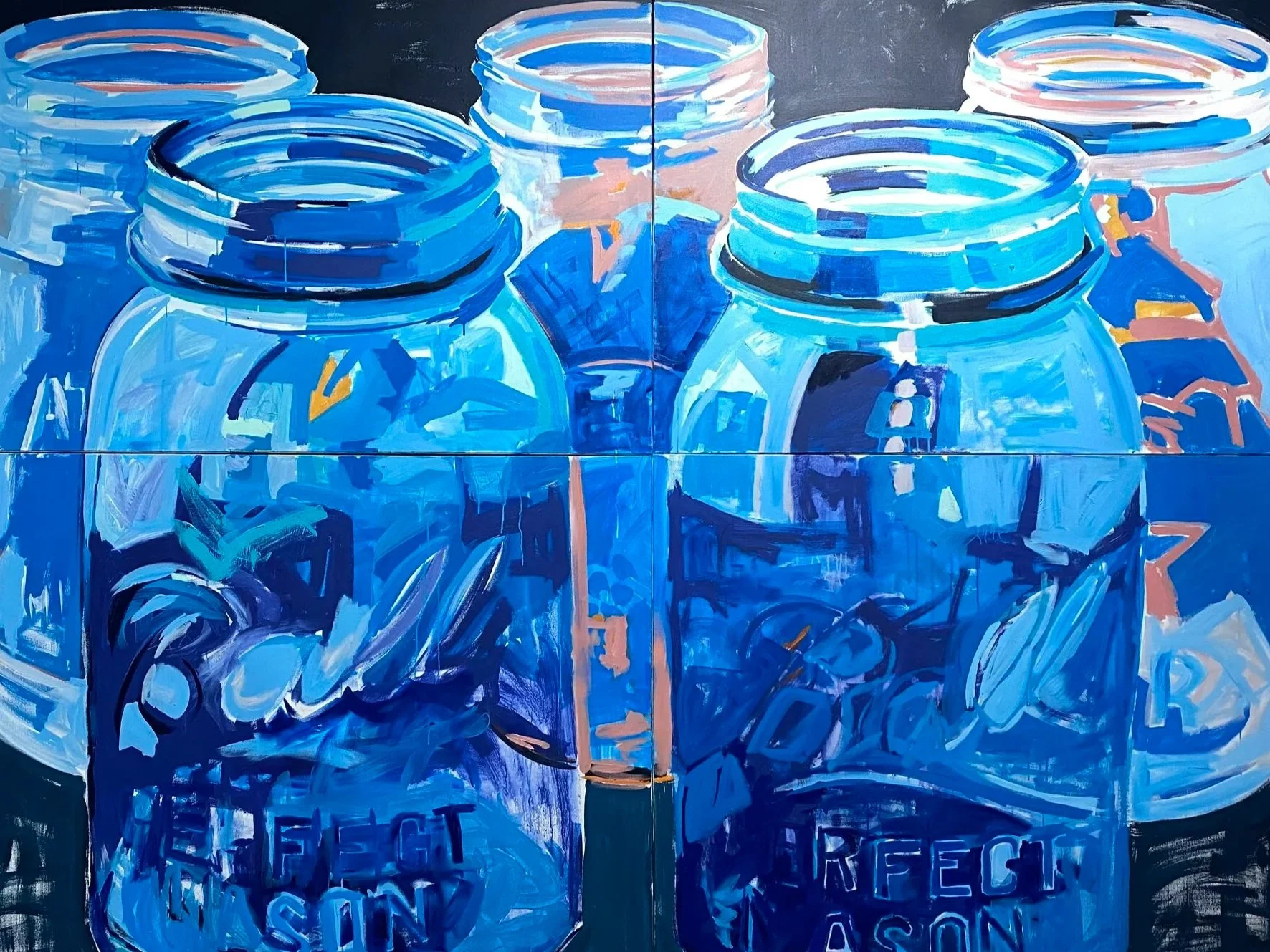
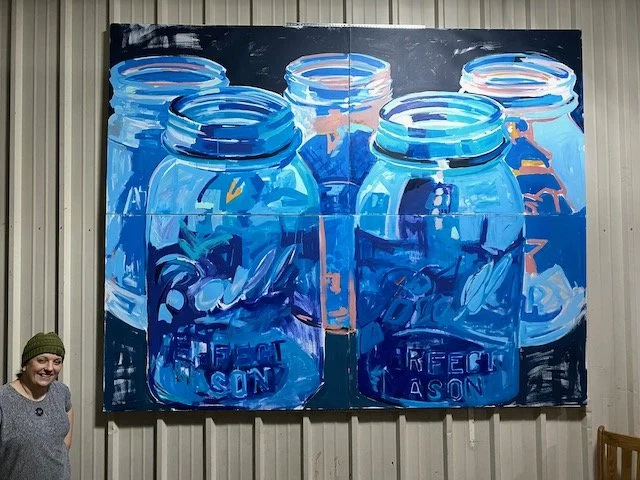
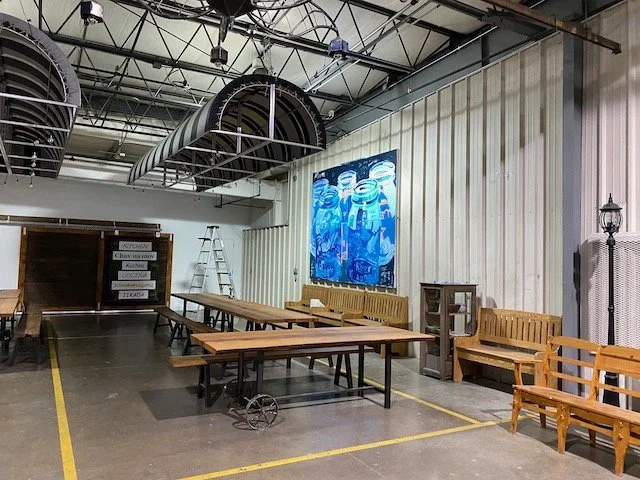
Jeub began photographing and sketching her empty jars, tracing the symbolism she saw in their forms through the uncertainty of that year. The result is a 10-foot wide by 8-foot tall painting installed at Sprout Marketplace in Little Falls, depicting an abstracted collection of Ball, Mason, Golden Harvest, and Atlas jars in layered brushstrokes and shifting color — as unpredictable and alive as a growing season.
Stories Around Food is a partnership with Sprout MN, funded in part by Five Wings Arts Council and ArtPlace America's National Creative Placemaking Fund, awarded to Region Five Development Commission. It is a meditation on what feeds us — not just the food itself, but the labor, the relationships, the preparation, and the act of sitting down together that make a community whole.
Process